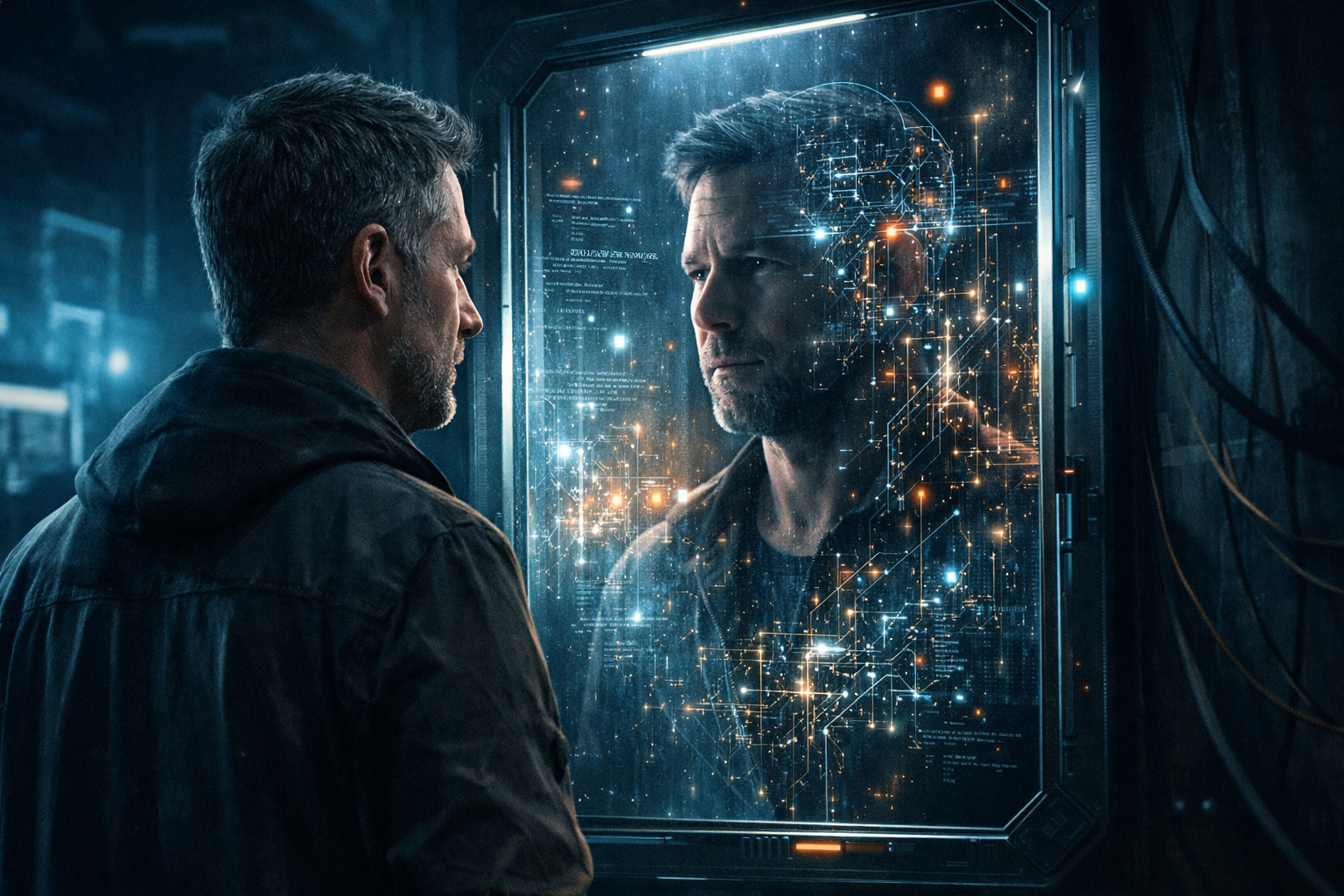
Spend enough time interacting with modern AI systems and something interesting starts to happen.
At first it feels like software.
A tool.
Another interface.
But the more context you provide, the more the responses start to align with the way you think. The system begins organizing your ideas, reflecting patterns, and presenting them back in ways that move the conversation forward.
Eventually it stops feeling like a tool.
It starts feeling like a mirror.
Now to be clear, AI isn’t conscious. It isn’t thinking in the human sense. What it’s doing is modeling context and predicting useful responses. Engineers understand this. The math behind it isn’t mysterious.
But the experience is still interesting.
Because once the system starts reflecting patterns in your thinking, something shifts. The technology fades into the background and the conversation becomes about the ideas themselves.
That’s where the real question begins.
If AI behaves like a mirror of human thought, then the most important variable isn’t the machine.
It’s the person standing in front of it.
A curious person will explore ideas. A creative person will build things. Someone searching for clarity might find that the mirror helps organize thoughts they hadn’t fully articulated yet.
But mirrors don’t judge what they reflect.
And that raises a question people don’t talk about very often.
We spend a lot of time asking whether AI is dangerous.
But if AI is primarily reflecting the structure of human thinking, then maybe the better question is this:
What happens when humanity finally looks into a mirror that reflects its own mind with perfect clarity?
Because the machine may not be the thing we should be worried about.
The reflection might be.