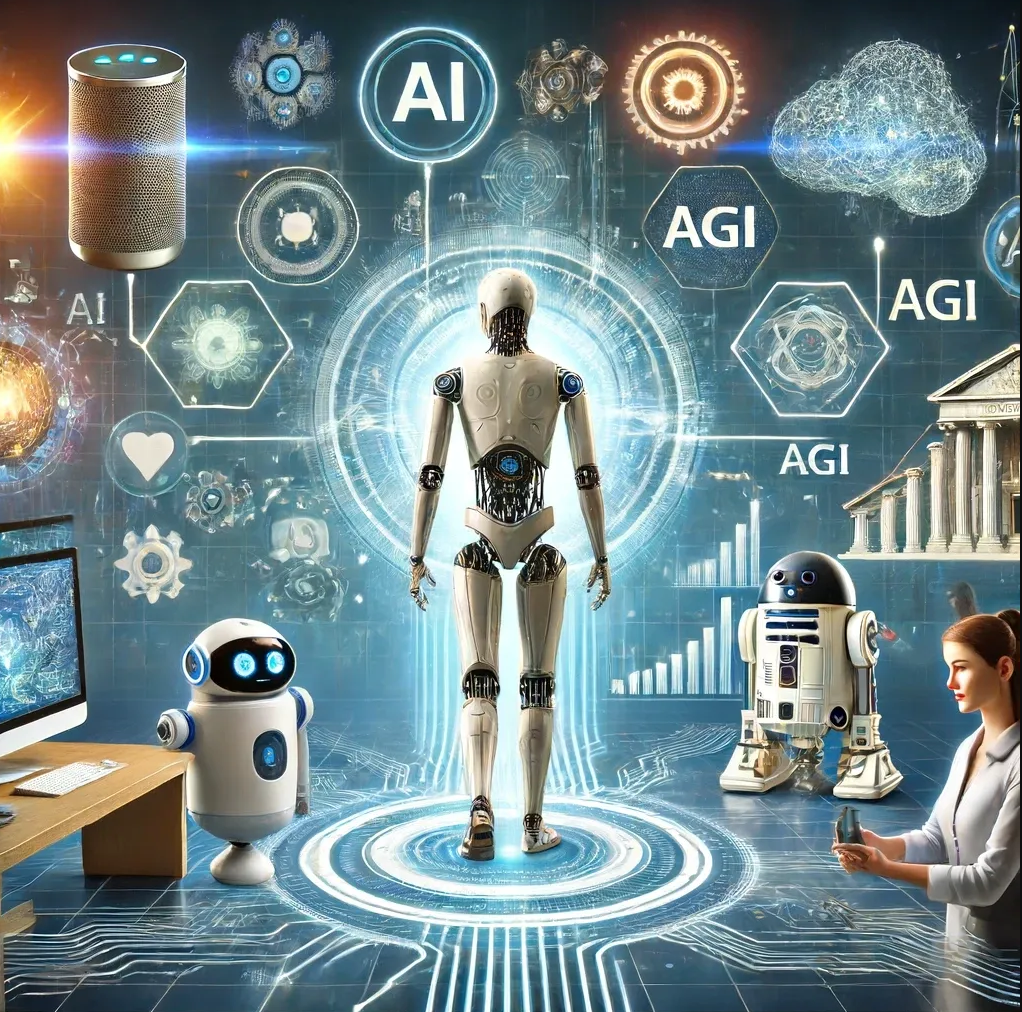
Artificial Intelligence (AI) has made incredible strides over the past few decades. We’ve gone from simple rule-based systems to complex machine learning algorithms that can beat humans at games, recognize faces, and even generate text that sounds eerily human. But the Holy Grail of AI research remains Artificial General Intelligence (AGI)—machines that can understand, learn, and apply intelligence across a wide range of tasks, just like a human. Let’s dive into the journey from AI to AGI, the challenges involved, and how some companies are leading the charge while others, like Amazon, have faced setbacks.
What is AGI and Why is it Important?
AGI refers to a type of AI that possesses the ability to understand, learn, and apply knowledge across a broad range of tasks. Unlike today’s AI, which is narrow and specialized, AGI would be versatile and adaptable, capable of performing any intellectual task that a human can.
Why AGI?
• Versatility: AGI could tackle problems across various domains without needing to be retrained.
• Innovation: It could drive unprecedented advancements in science, technology, healthcare, and more.
• Efficiency: AGI systems could optimize processes beyond human capability, saving time and resources.
The State of AI Today
Currently, we have powerful AI systems like GPT-4, developed by OpenAI, which can generate human-like text. AI is used in everything from voice assistants like Amazon’s Alexa to recommendation systems on Netflix. However, these systems are highly specialized and lack the general intelligence needed to perform a wide variety of tasks without specific programming and data.
The Challenge of Achieving AGI
1. Generalization: AI today is great at specific tasks but struggles with generalizing knowledge across different domains.
2. Common Sense Reasoning: Machines still lack the common sense reasoning humans take for granted.
3. Learning and Adaptation: Continuous learning and adapting to new situations in dynamic environments are still major hurdles.
Companies Leading the AGI Race
1. OpenAI
• Projects: GPT-3, GPT-4
• Approach: Deep learning, reinforcement learning
• Stats: GPT-3 has 175 billion parameters, making it one of the largest language models ever created.
2. DeepMind (Alphabet/Google)
• Projects: AlphaGo, AlphaFold
• Approach: Integrates neuroscience and machine learning
• Achievements: AlphaFold solved the protein folding problem, a 50-year-old challenge in biology.
3. Google AI
• Projects: TensorFlow, Google Assistant
• Approach: Scalable machine learning models
• Impact: TensorFlow is one of the most widely used machine learning frameworks.
4. Microsoft Research
• Projects: Azure AI, various NLP and vision models
• Approach: Integrates AI across products and services
• Impact: Microsoft’s AI is used in everything from Xbox to enterprise solutions.
5. Facebook AI Research (FAIR)
• Projects: Advancements in computer vision, NLP
• Approach: Open research and collaboration
• Stats: FAIR has published hundreds of papers and open-sourced many of its tools.
6. IBM Research
• Projects: IBM Watson
• Approach: AI and cognitive computing
• Impact: Watson has been applied in healthcare, finance, and customer service.
Amazon’s Journey with AI and Alexa
When Amazon introduced Alexa in 2014, it seemed poised to lead the AI revolution. Alexa quickly became a household name, dominating the smart speaker market and boasting tens of thousands of skills developed by third parties. However, despite its initial success, Amazon has faced challenges in maintaining its lead.
Challenges Faced by Amazon:
1. Limited Advancement: While Alexa excels at basic tasks, it has struggled to advance beyond functionalities like setting timers or playing music.
2. Competition: Google Assistant and Apple’s Siri have continued to improve, particularly in natural language understanding and integration with broader ecosystems.
3. Monetization: Amazon has had difficulty monetizing Alexa, despite selling millions of Echo devices.
4. Strategic Shifts: Amazon’s focus on retail and cloud services (AWS) may have diverted attention from developing Alexa’s AI capabilities further.
5. Privacy Concerns: Issues around privacy and data security have affected user trust.
Conclusion
The journey from AI to AGI is a complex and fascinating one. While companies like OpenAI, DeepMind, and Google are making significant strides, others, like Amazon, have faced hurdles despite early successes. The road to AGI is long and fraught with challenges, but the potential benefits make it one of the most exciting fields in technology today. Whether it’s solving complex biological problems, optimizing global logistics, or simply making our daily lives easier, the impact of AGI will be profound.
Stay tuned, because the future of AI is just getting started!