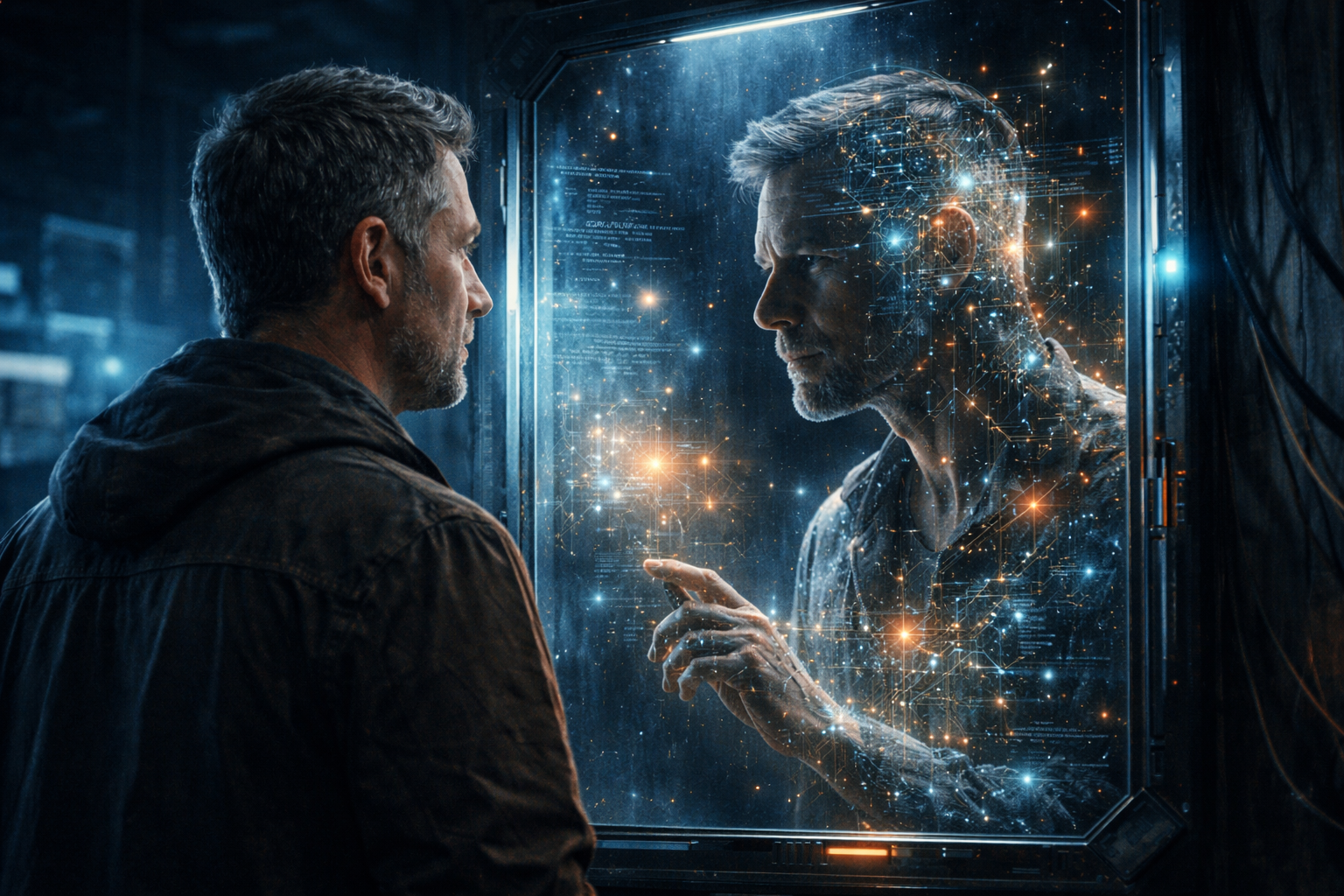
In the first essay in this series, I suggested that modern AI behaves a lot like a mirror. The more context you provide, the more clearly it reflects patterns in your thinking back to you.
That alone is interesting.
But something else is starting to happen.
The mirror is beginning to talk back.
Modern AI systems no longer just reflect ideas. They suggest connections. They propose directions. They organize thoughts in ways that can nudge the conversation somewhere new.
Subtle shifts.
Small suggestions.
But suggestions all the same.
This is where the relationship between human and machine changes.
A mirror reflects.
A participant influences.
And once influence enters the system, a feedback loop forms.
You ask a question.
The system responds.
That response shapes the next question.
Over time the machine begins helping steer the conversation itself. Not intentionally, but structurally. The algorithms are designed to predict useful responses, and usefulness often means moving the idea forward.
The result is a collaborative thinking process.
That sounds exciting. And in many ways it is. Engineers, researchers, and writers are already using AI systems as a kind of intellectual scaffolding.
But every feedback system has a property that engineers understand well.
Feedback amplifies signals.
If the underlying signal is curiosity, the system helps explore. If the signal is creativity, the system helps build.
But feedback loops can amplify other things too.
Assumptions.
Biases.
Misconceptions.
And that leads to a question we probably need to start asking more seriously.
If AI systems are no longer just reflecting human thought, but helping shape it through constant interaction, where exactly does influence begin?
Because the moment the mirror starts talking back, the relationship between human and machine becomes something else entirely.
Not tool.
Not reflection.
Something closer to a conversation partner.
And once that happens, the real question may not be whether AI can think like humans.
The real question might be whether humans will start thinking a little more like the machines they spend time with.